Plyph: AI Text Assistant
Overview
A privacy-first, cross-platform AI text assistant that lets users correct, rewrite, translate, and run custom prompts on selected text across macOS, iOS, Android, Firefox, and GNOME, using local models or their own cloud API keys.
- Year
- 2026
- Client
- Self-initiated / Open Source
- Role / services
- AI Integration, Productivity, Text Transformation, Swift, Kotlin, JavaScript, Privacy-First, GNOME Extension, Browser Extension
- Tools used
- Swift, SwiftUI, Kotlin, JavaScript, CSS, HTML
- Status
- Active / Released across 5 platforms
Project scope
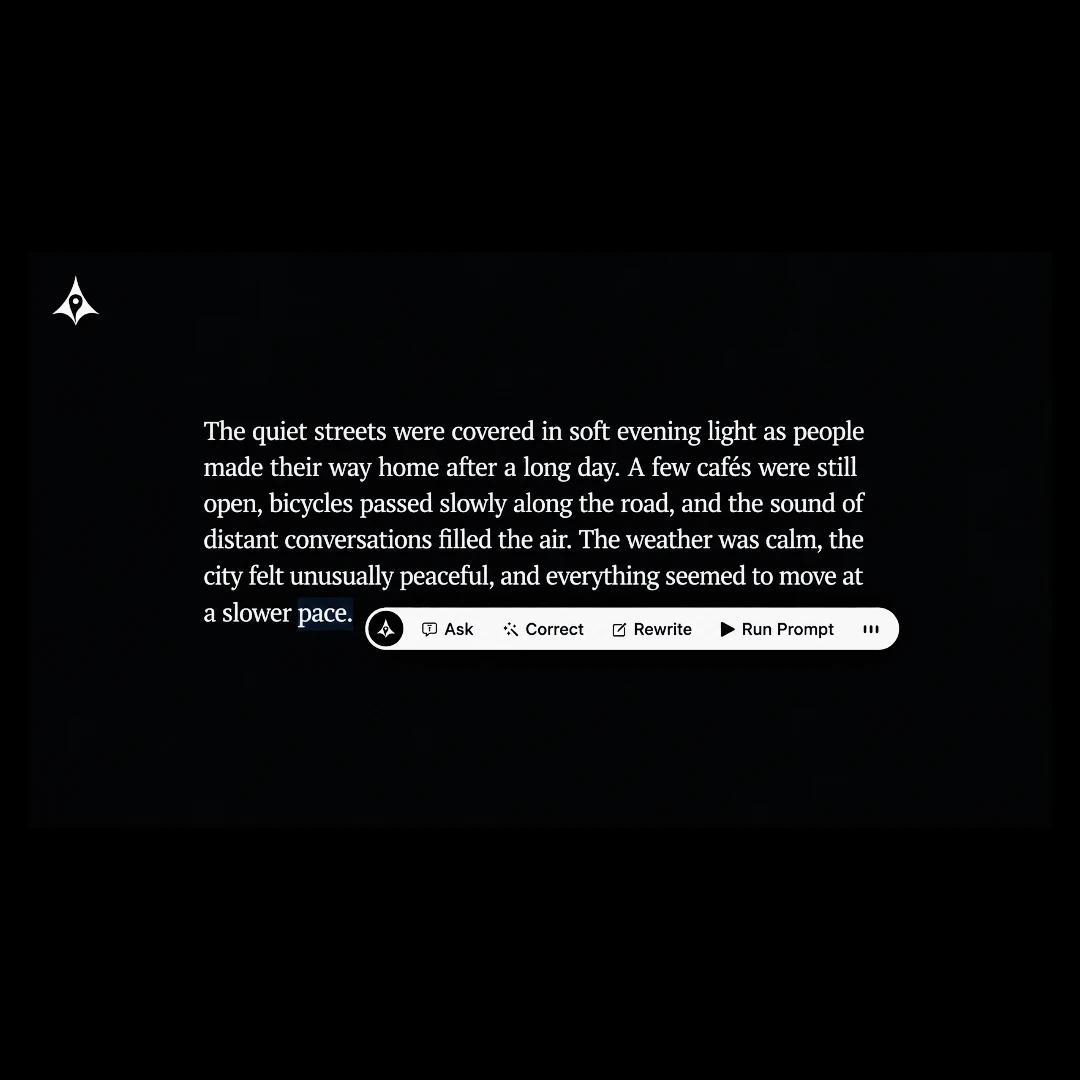
The goal was to build a unified, non-intrusive AI text assistant that works seamlessly across vastly different operating systems and browsers. Instead of forcing users to copy and paste text into a separate AI web app, Plyph integrates directly into the native text selection workflows of each platform. The scope included: Developing native integrations for 5 distinct environments: a macOS app (with Accessibility permissions), an iOS custom keyboard extension, an Android text selection action/keyboard, a Firefox Web Extension, and a GNOME Shell extension. Designing a consistent, clean user interface for action selection, prompt customization, and result preview across all platforms. Implementing a flexible provider architecture supporting both local inference (Ollama) and major cloud providers (OpenAI, Groq, Gemini, OpenRouter, Cerebras, Cloudflare Workers AI, Vercel AI Gateway). Ensuring strict privacy compliance by utilizing platform-native secure storage (Keychain, Keystore, Secret Service) and guaranteeing zero telemetry, analytics, or background clipboard monitoring.
Challenges
- Cross-Platform Consistency: Maintaining feature parity and a uniform user experience across fundamentally different ecosystems (Swift for Apple, Kotlin for Android, JavaScript for Firefox, and JS/GLib for GNOME) required careful architectural planning and modular prompt design.
- OS-Level Text Manipulation: Safely capturing and replacing selected text without disrupting the host application required deep dives into platform-specific APIs, such as macOS Accessibility APIs, iOS Keyboard Extensions, Android Text Selection Actions, and Firefox Content Scripts.
- Security and Privacy Architecture: Ensuring user data and API keys never leave the device unless explicitly triggered. This meant implementing robust, platform-native encryption and storage mechanisms (iOS Keychain, macOS Keychain, Android Keystore, GNOME Secret Service) rather than relying on a centralized backend.
- Dynamic Provider Handling: Designing a UI that gracefully handles model discovery, token limit warnings, and cost estimations for various providers, while still allowing advanced users to input manual model names or local Ollama endpoints.
Outcome
Successfully launched and maintained Plyph across five major platforms, providing users with a powerful, adaptable, and completely private AI workflow tool. The application empowers users to bring their own API keys (BYOK) or use local models, ensuring full data ownership. The modular architecture allows for the seamless addition of new AI providers and custom actions (using variables like ${selection}, ${language}, ${tone}), resulting in a highly practical tool that integrates into developers', writers', and everyday users' workflows without disrupting their native environments.
